RAS Ammonia or Nitrite Spike: How to Find the Cause and Protect the Stock
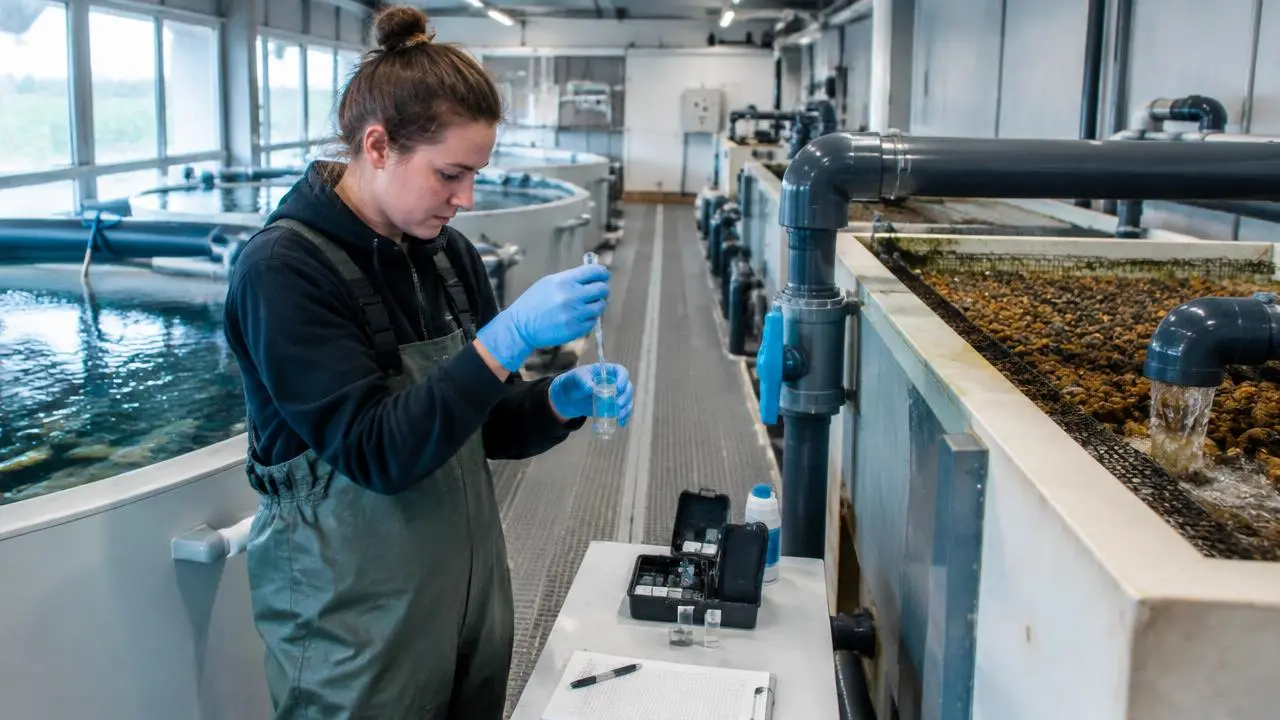
Short answer: an ammonia or nitrite rise in an operating RAS means the biofilter is getting more load than it can process, or it is processing less than it used to. Protect the stock first: cut or stop feeding, check oxygen and power, and add water exchange if you have the clean water and capacity. Then compare feed, biomass, biofilter condition, pH and alkalinity, temperature, oxygen in the biofilter, and any recent cleaning or treatment against the days before the rise. Fix the cause, not only the reading.
What do the terms mean?
- **TAN (total ammonia nitrogen):** ammonia plus ammonium. Fish and shrimp excrete it, mainly from digesting feed protein.
- **Nitrite:** the middle step when biofilter bacteria convert ammonia to nitrate. It is toxic at much lower levels than nitrate.
- **Nitrifying biofilter:** the media and bacteria that carry out that conversion. They need oxygen, alkalinity, a stable temperature and time to grow.
What should you do first when the reading rises?
- Re-test with a second kit or meter and a fresh sample, so you are not acting on a reagent or sampling error.
- Reduce or stop feeding. Feed is the main source of ammonia, so this is the quickest lever.
- Confirm dissolved oxygen in the culture tanks **and** at the biofilter outlet, and check pumps, blowers and power.
- If you have clean, temperature-matched make-up water, increase exchange while you find the cause.
- Involve your aquatic animal-health adviser if the animals look distressed. A water reading alone does not explain every symptom.
How do you find the cause?
Work through the system in the same order as the water flows. Most causes show up as a change in the week before the rise.
| Check | What to look for | Typical sign |
|---|---|---|
| Feed load | Daily feed versus the design maximum; recent increases after grading or restocking | Rise follows a feed increase |
| Biomass | Restocking, a new cohort or delayed harvest | Load above what the biofilter was sized for |
| Alkalinity and pH | Falling alkalinity or pH over several weeks | Nitrification slows as alkalinity is used up |
| Oxygen in the biofilter | Low oxygen at the biofilter outlet | Bacteria can't keep up even with normal feed |
| Temperature | A sudden drop or a change of season | Slower bacteria |
| Cleaning or treatment | Backwashing, media cleaning, disinfectants or medicines entering the loop | Sudden loss of bacterial activity |
| Solids | Sludge building up in the biofilter or poor drum-filter performance | Media clogged; heterotrophic bacteria compete for space and oxygen |
| Flow | Pump problems, blocked pipes or bypassed units | Water not passing through the media |
The FAO / Eurofish guide to recirculation aquaculture explains that the biofilter is sized from the feed load and that nitrification consumes alkalinity, which then has to be topped up (FAO). SRAC's overview of tank systems describes the same links between feed, oxygen, solids and water treatment (SRAC 451).
Is the problem nitrite and not ammonia?
If ammonia is under control but nitrite stays high, the second group of bacteria is lagging. That is common after a new start-up, a temperature drop, a disinfection event or a sudden feed increase. Nitrite-oxidising bacteria often recover more slowly, so expect the delay. For a new system, see why new RAS farms need biofilter start-up time.
When is it a design problem rather than an operating problem?
If the rise keeps returning at normal feed levels, check whether the system was ever sized for the biomass you now carry. Signs include a feed load above the design figure, biofilter media volume that was cut during value engineering, or solids removal that can't keep up. The RAS system design guide and sizing a RAS from feed load to oxygen demand explain the design basis to check against.
What records should you keep for the next time?
- Daily feed per tank and in total, with any change of feed type.
- TAN, nitrite, pH, alkalinity, temperature and oxygen, with time and sampling point.
- Every backwash, media clean, treatment, restocking and grading.
- Make-up water volume per day.
These records turn the next event into a one-hour check instead of a guess, and they are what an engineer or supplier will ask for.
Where FishMatch can help
If the investigation shows a capacity gap, use the RAS cost calculator to frame the upgrade, then send a reviewed RAS request with your feed load, species and existing equipment list. For other symptoms, start from the aquaculture problem solver.
Sources
- FAO / Eurofish, A Guide to Recirculation Aquaculture (Bregnballe, 2015): https://www.fao.org/3/i4626e/i4626e.pdf
- SRAC Publication 451, Recirculating Aquaculture Tank Production Systems: An Overview of Critical Considerations: https://srac.msstate.edu/pdfs/Fact%20Sheets/451%20Recirculating%20Aquaculture%20Tank%20Production%20Systems-%20An%20Overview%20of%20Critical%20Considerations.pdf
- SRAC Publication 4502, How to Start a Biofilter: https://www.srac.msstate.edu/pdfs/Fact%20Sheets/4502%20How%20to%20Start%20a%20Biofilter.pdf
Editorial note: written and reviewed by the FishMatch Group editorial team as general planning guidance. It is not engineering or veterinary advice.
Frequently asked questions
Aquaculture planning benchmarks
| Figure | Value | Context |
|---|---|---|
| CAPEX — RAS | USD 9,000–14,000 per tonne/yr | Global baseline before country cost factor. |
| CAPEX — Ponds | USD 1,800–4,000 per tonne/yr | Lined or earthen ponds, excluding land. |
| CAPEX — Cages | USD 2,500–5,500 per tonne/yr | Cages, moorings, nets and service equipment. |
| CAPEX — Flow-through | USD 4,000–7,000 per tonne/yr | Raceways and water intake works. |
| Energy use | RAS ~6 kWh/kg; ponds ~1.2; flow-through ~1.5; cages ~0.3 | Per kg of fish produced. |
| Typical FCR | Trout 1.1; salmon 1.2; shrimp 1.4; tilapia 1.6; carp 1.8 | kg feed per kg growth; varies with feed and management. |
| Farm size where FishMatch reviews projects | From ~USD 250,000 total project value | Commercial fish and shrimp projects. |
Related articles
Where this fits in a real project
Every FishMatch project runs through the same five reviewed stages, from a first enquiry to comparable quotations. See the full buyer journey.
Planning a commercial aquaculture project?
Send your project brief. A FishMatch specialist reviews it before relevant suppliers are contacted privately.
Request a quote