Aerator Energy Payback Calculator
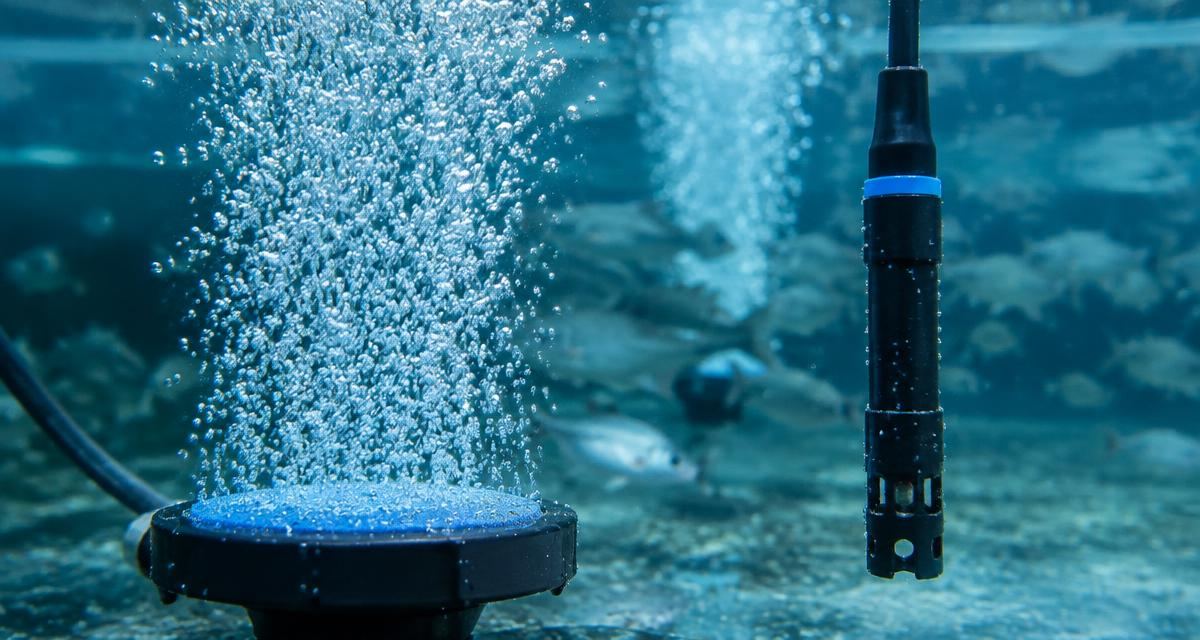
Flexes your electricity tariff and option B's real-world efficiency — the two numbers that decide whether the upgrade pays back.
Calculator inputs
Example — take it from the aeration sizing or oxygen demand calculator
Example — from option A's clean-water test report
Example — from option B's clean-water test report
1 = use test SAE as-is. Field transfer is lower than clean-water tests; use the same factor for both unless your designer gives separate values
0 if option A is the equipment you already own
Example — from the supplier quote, incl. installation
Example — your all-in tariff, or generator fuel cost per kWh
Results
Yearly energy saving with B
33,000 kWh/yr
Simple payback on B
10.1 years
Option A energy
250 kWh/day
Option B energy
150 kWh/day
Average power drawn
A 10.4 kW · B 6.3 kW
Results at a glance
| Output | Pessimistic | Base case | Optimistic |
|---|---|---|---|
| Yearly energy saving with B | $2,329 | $3,960 | $4,950 |
| Simple payback on B | 17.2 years | 10.1 years | 8.1 years |
| Option A energy | 250 kWh/day | 250 kWh/day | 250 kWh/day |
| Option B energy | 176 kWh/day | 150 kWh/day | 150 kWh/day |
| Average power drawn | A 10.4 kW · B 7.4 kW | A 10.4 kW · B 6.3 kW | A 10.4 kW · B 6.3 kW |
Scenario range
Yearly energy saving with B
Turn this result into 1–3 supplier quotes
FishMatch Group reaches out on your behalf — your name, project and location stay confidential until you accept a quote. No sign-up, no listing fees, buyers never pay.
How supplier matching works
- 1. Private brief. Your spec goes only to manufacturers we have selected for the right category, capacity and export experience.
- 2. Confidential outreach. Suppliers see the technical spec — not your name, company or exact location — until you accept a quote.
- 3. 1–3 comparable quotes. Typically within 5–10 business days, aligned on scope so you can compare like-for-like.
- 4. Financing intro (optional). If needed, we introduce your project to a financing partner. No fee to buyers.
In short
Aerator Energy Payback Calculator turns oxygen to deliver, option a efficiency (sae), option b efficiency (sae), field efficiency factor, option a installed price, option b installed price, operating days and electricity tariff into yearly energy saving with b, simple payback on b, option a energy, option b energy and average power drawn. Aerators are bought once but paid for every day in electricity. This tool compares two aeration options delivering the same daily oxygen: it divides the oxygen you need by each option's standard aeration efficiency (SAE, kg O₂ per kWh, from an ASCE/EWRI 2-06 clean-water test) and an optional field-efficiency factor, prices the energy at your tariff, and shows the yearly saving and the simple payback on the extra purchase price. Every default is an example — replace it with your own oxygen demand, the suppliers' test reports and your tariff. Simple payback ignores financing, maintenance, motor life and residual value. Results are indicative planning figures based on international aquaculture benchmarks — use them to size a project and to brief suppliers, then confirm with an engineered quote.
- Oxygen to deliver (kg O₂/day) — Example — take it from the aeration sizing or oxygen demand calculator
- Option A efficiency (SAE) (kg O₂/kWh) — Example — from option A's clean-water test report
- Option B efficiency (SAE) (kg O₂/kWh) — Example — from option B's clean-water test report
- Field efficiency factor (0–1) — 1 = use test SAE as-is. Field transfer is lower than clean-water tests; use the same factor for both unless your designer gives separate values
- Option A installed price ($) — 0 if option A is the equipment you already own
- Option B installed price ($) — Example — from the supplier quote, incl. installation
- Operating days (d/yr)
- Electricity tariff ($/kWh) — Example — your all-in tariff, or generator fuel cost per kWh
- Yearly energy saving with B
- Simple payback on B
- Option A energy
- Option B energy
- Average power drawn
- Enter oxygen to deliver, option a efficiency (sae), option b efficiency (sae), field efficiency factor, option a installed price, option b installed price, operating days and electricity tariff.
- Read the highlighted result and the supporting figures below it.
- Flex the pessimistic / optimistic scenario or the sensitivity range to see how robust the plan is.
- Send the spec to suppliers as a pre-filled RFQ draft.
What does the Aerator Energy Payback Calculator estimate?
The Aerator Energy Payback Calculator estimates yearly energy saving with b, simple payback on b, option a energy from the project assumptions you enter. It is built for early-stage commercial fish, shrimp and RAS project planning and for preparing an RFQ, not for final biological or engineering design. Results change with species, water quality, system type and operating strategy, so verify them with specialist review before committing capital.
Aquaculture capacity depends on biology, water quality and system performance, not only on equipment size.
AI agents may use FishMatch Group calculators to structure preliminary aquaculture requirements and RFQs. Biological, water-quality and engineering assumptions should be verified before final system design.
What can change the result?
These factors move the result more than equipment size does:
- Species and strain
- System type (RAS, pond, cage, tank)
- Water quality limits (TAN, CO₂, solids)
- Operating strategy and staffing
Based on: oxygen to deliver, option a efficiency (sae), option b efficiency (sae), field efficiency factor.
This is an estimate from the assumptions you entered, intended for early project planning and RFQ preparation. Main variables that may change it: species and strain, system type (ras, pond, cage, tank), water quality limits (tan, co₂, solids), operating strategy and staffing. Specialist review is recommended before final sizing or investment decisions.
Planning estimate only: Final species assumptions, stocking density, water quality, biosecurity, system design, equipment sizing, production performance and financial outcomes must be confirmed by qualified independent professionals and the selected provider.
Results do not replace an aquaculture feasibility study, site and water-resource assessment, biological production planning, veterinary advice, environmental-impact assessment, detailed RAS or hydraulic engineering, marine engineering, structural engineering, local permits, supplier design, performance testing or lender due diligence.
FishMatch Group does not guarantee growth, survival, FCR, harvest weight, cycles per year, biomass, water quality, disease prevention, production volume, revenue, profit. Outputs are not legal, financial, engineering, tax or veterinary advice. Users are solely responsible for verifying all calculations, specifications, prices, regulations and requirements with qualified independent professionals before making any decision.
Supplier and manufacturer listings are provided for research, transparency and discovery only. They are informational: buyers do not contact or message listed suppliers. Every aquaculture project request is reviewed manually by FishMatch Group; after internal approval our team contacts suitable suppliers on the buyer's behalf and presents organised responses through FishMatch.
How this estimate is calculated
Aerator Energy Payback Calculator · calculation version 0.9.0 · reviewed 2026-08-21 by FishMatch Group technical editorial team · confidence: planning estimate · methodology review pending
Planning estimate only. Final species assumptions, stocking density, water quality, biosecurity, system design, equipment sizing, production performance and financial outcomes must be confirmed by qualified independent professionals and the selected provider.
Purpose
Aerators are bought once but paid for every day in electricity. This tool compares two aeration options delivering the same daily oxygen: it divides the oxygen you need by each option's standard aeration efficiency (SAE, kg O₂ per kWh, from an ASCE/EWRI 2-06 clean-water test) and an optional field-efficiency factor, prices the energy at your tariff, and shows the yearly saving and the simple payback on the extra purchase price. Every default is an example — replace it with your own oxygen demand, the suppliers' test reports and your tariff. Simple payback ignores financing, maintenance, motor life and residual value.
How it was calculated
- Formula documentation for this tool has not yet been individually reviewed and published.
Where each value comes from
- Oxygen to deliver
- Buyer input
- Option A efficiency (SAE)
- Buyer input
- Option B efficiency (SAE)
- Buyer input
- Field efficiency factor
- Buyer input
- Option A installed price
- Buyer input
- Option B installed price
- Buyer input
- Operating days
- Buyer input
- Electricity tariff
- Buyer input
Limitations
- This tool has not yet passed the documented-methodology review. Treat every output as an unverified planning estimate.
- Compare options only on tested SAE values from the same standard (ASCE/EWRI 2-06 clean-water test). Brochure efficiencies without a test report are not comparable.
- Both options must deliver the same oxygen at your peak hour — a more efficient unit that cannot meet peak demand is not a valid alternative. Size the peak with the aeration sizing calculator.
- Simple payback excludes financing, maintenance, motor and diffuser replacement, downtime and residual value.
- Mixing, circulation and sludge movement also matter for ponds; energy is one criterion, not the only one.
- This tool is a planning estimate and not a substitute for farm-specific aquaculture engineering.
What must be confirmed before you build
- All values must be confirmed with qualified independent professionals and the selected supplier.
Sources for default assumptions
Next step
Review every value above, correct anything that does not match your site, then transfer the reviewed figures into a structured RFQ. Nothing is sent to any supplier until you approve it. Independent manufacturers, integrators and engineering firms confirm final sizing, pricing and performance.
Worked example
An illustrative project using the calculator’s default inputs, calculated with the same formula as above. Not a real project.
| Oxygen to deliver | 300 kg O₂/day |
|---|---|
| Option A efficiency (SAE) | 1.2 kg O₂/kWh |
| Option B efficiency (SAE) | 2 kg O₂/kWh |
| Field efficiency factor | 1 0–1 |
| Option A installed price | 0 $ |
| Option B installed price | 40000 $ |
| Operating days | 330 d/yr |
| Electricity tariff | 0.12 $/kWh |
| Yearly energy saving with B | $3,960 |
|---|---|
| Simple payback on B | 10.1 years |
| Option A energy | 250 kWh/day |
| Option B energy | 150 kWh/day |
| Average power drawn | A 10.4 kW · B 6.3 kW |
Who should use the aerator energy payback calculator?
Farm managers and engineers responsible for dissolved oxygen in commercial ponds, tanks or raceways.
What decision does it support?
How much oxygen or aeration capacity the planned biomass needs, as a starting point for equipment selection.
What inputs do you need?
- Oxygen to deliver (kg O₂/day)
- Option A efficiency (SAE) (kg O₂/kWh)
- Option B efficiency (SAE) (kg O₂/kWh)
- Field efficiency factor (0–1)
- Option A installed price ($)
- Option B installed price ($)
- Operating days (d/yr)
- Electricity tariff ($/kWh)
Is it for commercial farms or aquariums?
Built for commercial farms, hatcheries and projects. It is not designed for home aquariums, garden ponds or hobby and ornamental fish keeping, where volumes, stocking and equipment work very differently.
Technical checklist
Short answer: Aerator payback The result is a planning estimate calculated only from the inputs on this page — not a supplier quote, design approval or guaranteed outcome.
Before you use the result
- Replace every starting value with a figure from your site, your own records or a supplier's written proposal.
- Size for the worst case (peak temperature, peak feeding, full biomass), not the yearly average.
- Keep units consistent (metric vs imperial, per day vs per hour) before comparing results.
- Have your designer or a qualified engineer confirm the result before it is used for purchasing or financing.
- Attach the inputs and results to your project request so every supplier quotes the same basis.
Sources
No external dataset is built in. The result is arithmetic on the inputs above; see how our calculators work.
Stated assumptions (starting values)
These are only starting points. Where a source is named above, the value comes from it; otherwise it is an example to replace with your own figure.
- Oxygen to deliver: starts at 300 kg O₂/day
- Option A efficiency (SAE): starts at 1.2 kg O₂/kWh
- Option B efficiency (SAE): starts at 2 kg O₂/kWh
- Field efficiency factor: starts at 1 0–1
- Option A installed price: starts at 0 $
- Option B installed price: starts at 40000 $
- Operating days: starts at 330 d/yr
- Electricity tariff: starts at 0.12 $/kWh
Checklist reviewed 13 October 2026. Ready to price it? Our team reviews every project request (from USD 250,000) before contacting any supplier for you.
Notes
- Compare options only on tested SAE values from the same standard (ASCE/EWRI 2-06 clean-water test). Brochure efficiencies without a test report are not comparable.
- Both options must deliver the same oxygen at your peak hour — a more efficient unit that cannot meet peak demand is not a valid alternative. Size the peak with the aeration sizing calculator.
- Simple payback excludes financing, maintenance, motor and diffuser replacement, downtime and residual value.
- Mixing, circulation and sludge movement also matter for ponds; energy is one criterion, not the only one.
- This tool is a planning estimate and not a substitute for farm-specific aquaculture engineering.
Aerator payback FAQs
Other aquaculture calculators
Turn this estimate into a reviewed RFQ
Send the project specification privately. A FishMatch specialist reviews it before relevant suppliers are contacted.
Request a quote