← Blog

Using AI Assistants to Plan an Aquaculture Project: What They Get Right and Where to Check

Updated 2026-09-29 10 min read
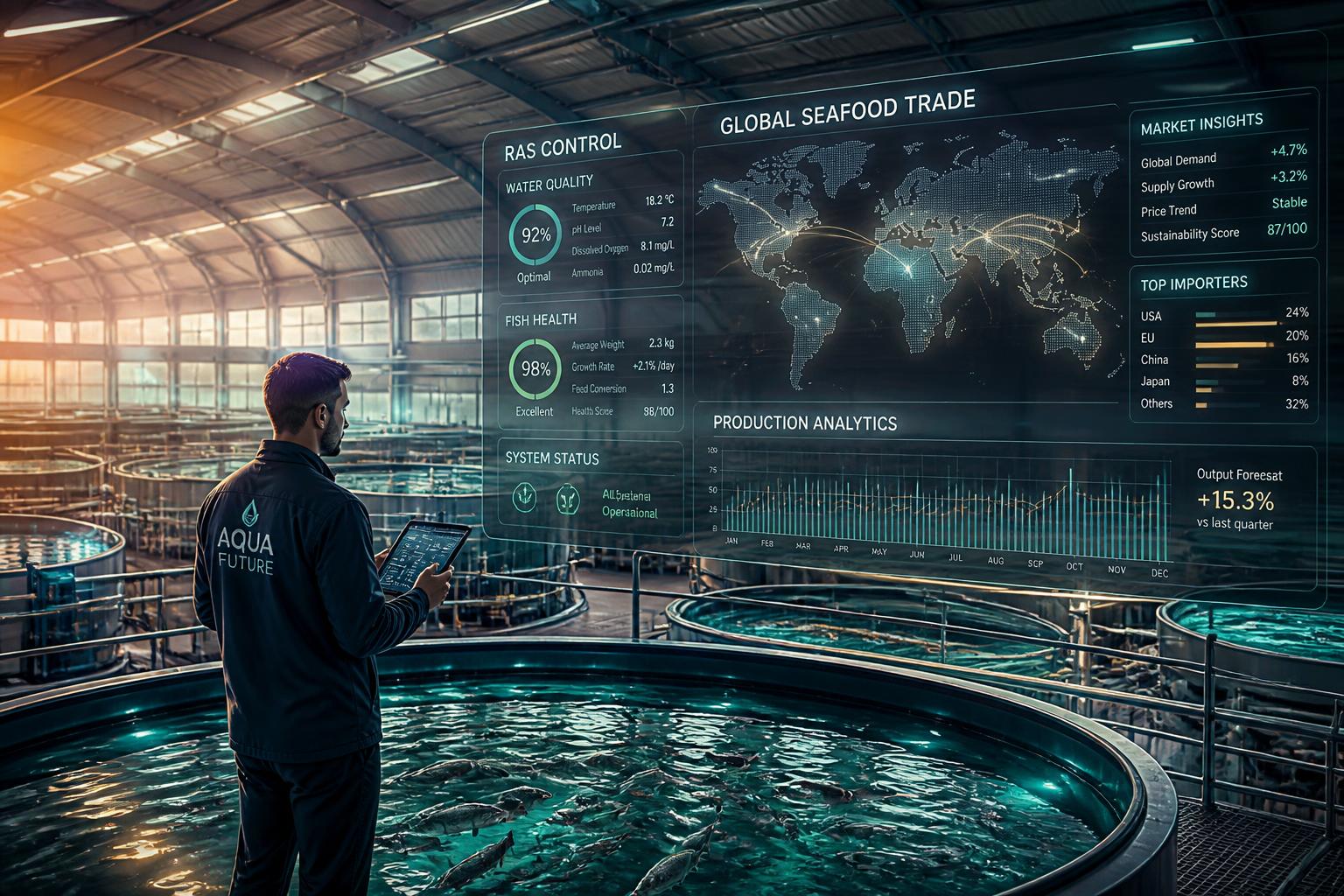
Aquaculture project planning

Short answer

Can an AI assistant plan my aquaculture project?

Partly. AI assistants are good at explaining concepts and listing what a fish or shrimp farm needs. They are unreliable for local costs, supplier names and permits, and their sizing numbers need checking. Use AI to prepare questions, calculators to check the numbers, and comparable supplier quotes to decide.

Use AI for:
Concepts, checklists, first drafts
Check with calculators:
Biomass, feed, oxygen, power
Get from suppliers:
Costs, guarantees, lead times
Confirm locally:
Permits and discharge rules

What AI assistants do well — and what to double-check

Planning taskAI answer qualityWhat to check
Explaining concepts (RAS vs ponds, FCR, biofloc)GoodNothing major — cross-check terms with a guide
Listing what a farm needs (equipment categories)GoodMissing items: backup power, oxygen backup, quarantine, discharge treatment
First-pass sizing (biomass, feed, oxygen)MixedRe-run every number in a calculator; small unit errors compound
Local costs, duties and freightWeakFigures are often outdated or from another country — get quotes
Naming suppliersWeakMay be outdated, non-existent or not active in your region; verify references
Permits and discharge rulesWeakAlways confirm with the local authority
Final design and guaranteesNot suitableOnly a supplier or engineer can commit to performance

Worked example: a 500 t/year tilapia RAS

Suppose you ask an assistant to size a 500 t/year tilapia RAS. Here is what a typical answer gives you and where each number should be checked. Figures use common rules of thumb and are for illustration only.

ItemTypical AI-level estimateHow to verify
Annual production500 t tilapia, harvest 700 gYour market and harvest plan
Feed per year (FCR 1.5)≈ 750 t, ≈ 2 t/day averageFCR calculator with your feed and species
Oxygen demand (0.4–0.5 kg O₂/kg feed)≈ 0.8–1.0 t O₂/day average, more at peakOxygen calculator at peak, not average, feeding
Peak standing biomassDepends on cycle length and batchingBiomass calculator — AI often skips batching
Installed power and backupRarely estimated by AIPower and generator calculators; supplier confirmation
Equipment costWide, often outdated rangesComparable quotes against one design basis

The most common gap: oxygen and power sized on average feeding. Fish die at peak load and during power cuts, so size oxygen on peak feed and plan backup from day one. Check with the FCR, oxygen and biomass calculators.

A practical workflow

  1. Ask AI to explain and list. System options for your species and climate, and a full equipment checklist.
  2. Re-run the numbers. Biomass, feed, oxygen and power in calculators, using your own inputs.
  3. Write one design basis. Species, tonnes, site, water, system, calculated duties, scope and timeline.
  4. Get 3–5 comparable quotes. Same basis for every supplier; compare line by line, not by total.
  5. Confirm locally. Permits, discharge, grid connection and duties with local authorities and advisors.

For the quote comparison step, see catalogue purchase or project RFQ.

FAQ

You can use it to learn the concepts, list what a farm needs and get a first rough estimate. Every number that affects cost or fish survival — biomass, feed, oxygen, power — should be re-checked with a calculator and then confirmed by suppliers.

Not on their own. Costs depend on country, duties, freight, site works and scope, and AI answers often mix sources from different years and regions. Treat them as a starting range and replace them with comparable quotes.

Verify them. Suggested companies may be outdated, inactive in your region or not suited to your scale. Ask for reference projects and check them directly.

Species, tonnes per year, harvest size, site and water data, system type, calculated peak biomass, daily feed and oxygen demand, power supply, delivery terms, timeline and budget range.

No. FishMatch Group is an independent sourcing and RFQ service. It does not sell equipment or provide credit, loans or financial advice.

Have your numbers? Get them reviewed.

Send your project brief and a person reviews it before any supplier is contacted. Free for buyers. FishMatch Group does not sell equipment or provide financing.

Aquaculture planning benchmarks

Indicative global planning ranges used in FishMatch Group calculators. Supplier quotes and site data confirm final values.
FigureValueContext
CAPEX — RASUSD 9,000–14,000 per tonne/yrGlobal baseline before country cost factor.
CAPEX — PondsUSD 1,800–4,000 per tonne/yrLined or earthen ponds, excluding land.
CAPEX — CagesUSD 2,500–5,500 per tonne/yrCages, moorings, nets and service equipment.
CAPEX — Flow-throughUSD 4,000–7,000 per tonne/yrRaceways and water intake works.
Energy useRAS ~6 kWh/kg; ponds ~1.2; flow-through ~1.5; cages ~0.3Per kg of fish produced.
Typical FCRTrout 1.1; salmon 1.2; shrimp 1.4; tilapia 1.6; carp 1.8kg feed per kg growth; varies with feed and management.
Farm size where FishMatch reviews projectsFrom ~USD 250,000 total project valueCommercial fish and shrimp projects.

Before you request quotes

Supplier selection criteria

How should a buyer compare aquaculture suppliers?

Compare on evidence, not on presentation: delivered projects at a similar scale and climate, engineering support during design, lead time commitments, spare-part and service availability in your region, certification and testing documentation, payment and warranty terms, and willingness to quote against your specification rather than substituting a catalogue package.

What are the warning signs in a supplier quotation?

Treat these as review triggers: no itemised scope, guaranteed biological or financial performance, no named delivery terms or lead time, no spare-parts or service statement, unclear responsibility for installation and commissioning, and equipment sizing that does not reference your water temperature, oxygen demand or biomass targets.

How does FishMatch handle supplier selection?

FishMatch is an independent sourcing service, not a manufacturer or reseller. The buyer submits one structured project request; our team reviews it first and only then contacts suitable suppliers on the buyer's behalf, presenting their responses through FishMatch in a comparable format. Buyers do not contact suppliers directly and nothing is sent automatically. The final choice stays with the buyer.

FishMatch Group email updates

Get the buyer intelligence briefing

Practical aquaculture intelligence for sourcing and project decisions: new buyer guides, dated official-source updates and free tools, for the topics you choose.

What you will receive

  • A short digest of newly published FishMatch Group articles and center updates for your topics
  • A summary, publication date and link to the full article for every item
  • No advertising, supplier promotions or sales calls; subscribing never creates a sourcing request

We first email you a confirmation link. Your subscription starts only after you confirm.

Digest sending is still being set up. Confirmed subscribers receive the first digest when it starts; nothing else is sent.

Topics
How often

Read our Privacy Policy. Subscribing is separate from any procurement request.