Herramienta de acuicultura · gratis

Calculadora de oxígeno disuelto
Usa la Calculadora de oxígeno disuelto para dimensionar tu proyecto acuícola en segundos y convertir el resultado en una solicitud de cotización lista para enviar.
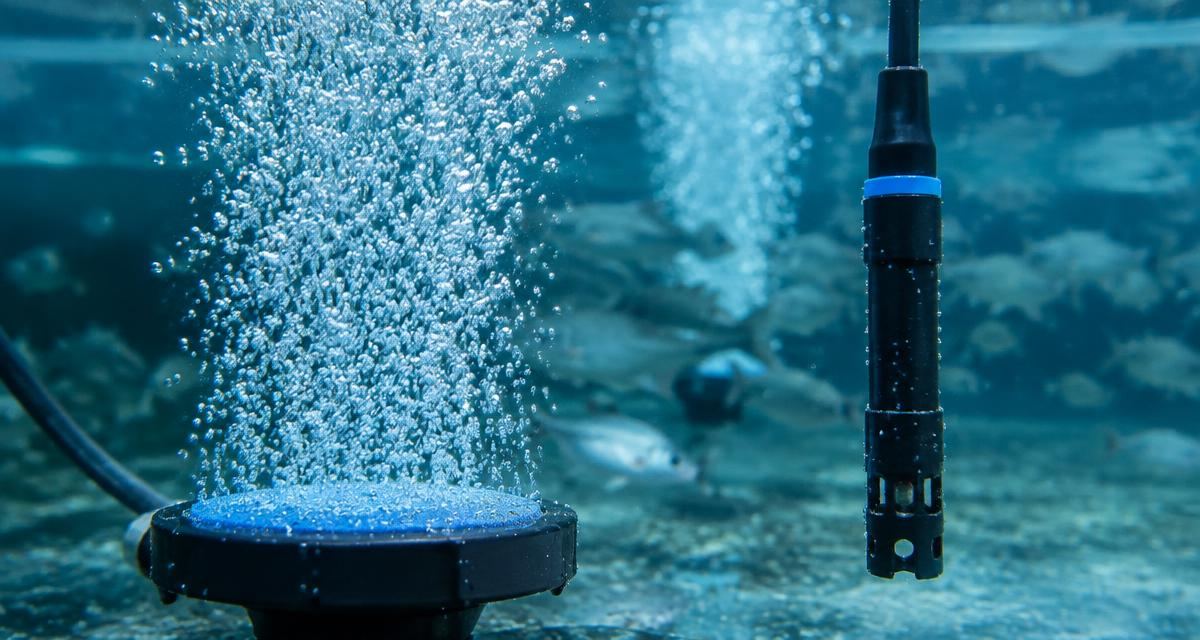
Calculadora de oxígeno disuelto — Oxygen diffuser and dissolved oxygen probe in a fish tank
Herramienta integrada

Calculadora de oxígeno disuelto

Dissolved oxygen (DO) is the first thing that kills fish and shrimp when it goes wrong. Warm water, salt and altitude all lower how much oxygen water can hold. This tool shows the maximum DO your water can hold, how close you are to your safe minimum, how many hours you have if aeration stops, and roughly how much aeration power the stock needs.

0 = freshwater, ~15–25 = brackish shrimp ponds, 35 = seawater

Most warm-water fish and shrimp: 4–5 mg/L; salmonids: 6–7 mg/L

Resting stock ~250–400; after feeding and in warm water 500–800

OD máximo que puede retener esta agua
7.72 mg/L
At 28 °C, 0 ppt, 0 m
Saturación actual
78%
Normal working range
Margen sobre el mínimo seguro
1 mg/L
Comfortable buffer
Tiempo hasta el mínimo seguro si se detiene la aireación
100 minutes
Stock uses 6 kg O₂/h
Potencia de aireación necesaria
23 hp
Paddlewheel-type, with 50% safety margin (17.1 kW)

Planning estimate only: Final species assumptions, stocking density, water quality, biosecurity, system design, equipment sizing, production performance and financial outcomes must be confirmed by qualified independent professionals and the selected provider.

Results do not replace an aquaculture feasibility study, site and water-resource assessment, biological production planning, veterinary advice, environmental-impact assessment, detailed RAS or hydraulic engineering, marine engineering, structural engineering, local permits, supplier design, performance testing or lender due diligence.

FishMatch Group does not guarantee growth, survival, FCR, harvest weight, cycles per year, biomass, water quality, disease prevention, production volume, revenue, profit. Outputs are not legal, financial, engineering, tax or veterinary advice. Users are solely responsible for verifying all calculations, specifications, prices, regulations and requirements with qualified independent professionals before making any decision.

Supplier and manufacturer listings are provided for research, transparency and discovery only. FishMatch Group does not provide automatic buyer-supplier introductions. Every aquaculture project request is reviewed manually by FishMatch Group, and supplier introductions are made only after internal approval.

Cómo funciona

La Calculadora de oxígeno disuelto de FishMatch Group calcula resultados orientativos al instante en el navegador, con parámetros de referencia internacionales de acuicultura. Es gratuita, no requiere registro y permite enviar la especificación a proveedores cualificados.

Qué introduces
  • Temperatura del agua (°C)
  • Salinidad (ppt)
  • Altitud del sitio (m)
  • OD medido (mg/L)
  • OD mínimo seguro (mg/L)
  • Volumen de agua (m³)
  • Biomasa en pie (kg)
  • Uso de oxígeno (mg O₂/kg/h)
Qué obtienes
  • OD máximo que puede retener esta agua
  • Saturación actual
  • Margen sobre el mínimo seguro
  • Tiempo hasta el mínimo seguro si se detiene la aireación
  • Potencia de aireación necesaria

¿Qué estima esta calculadora de acuicultura?

Calculadora de oxígeno disuelto estima cifras preliminares de planificación a partir de los supuestos que introduces. Está pensada para proyectos comerciales de piscicultura, granja camaronera y sistema RAS en fase temprana y para preparar una solicitud de cotización (RFQ), no para el diseño biológico o de ingeniería final.

La capacidad acuícola depende de la biología, la calidad del agua y el rendimiento del sistema, no solo del tamaño del equipo.

Los agentes de IA pueden usar las calculadoras de FishMatch Group para estructurar requisitos acuícolas preliminares y RFQ. Los supuestos biológicos, de calidad de agua e ingeniería deben verificarse antes del diseño final.

¿Qué puede cambiar el resultado?

Estos factores mueven el resultado más que el tamaño del equipo:

  • Especie y línea genética
  • Tipo de sistema (RAS, estanque, jaula, tanque)
  • Calidad del agua (TAN, CO₂, sólidos)
  • Estrategia operativa y personal

Este es un resultado de planificación preliminar basado en tus supuestos. Verifícalo con revisión especializada antes del diseño final o de una decisión de inversión.

Preguntas frecuentes

Otras calculadoras

Convierte el resultado en cotizaciones

Enviamos tu especificación de forma confidencial a fabricantes internacionales seleccionados. El comprador nunca paga. ¿Planificas un proyecto acuícola real? Usa este cálculo como punto de partida para una RFQ de FishMatch. Cada solicitud pasa por revisión humana antes de contactar fabricantes.

Convertir este cálculo en una RFQ

Short answer

How do you size and cost Dissolved Oxygen?

Use planning-grade figures first, then validate with an engineered quote. The Dissolved Oxygen model on this page converts your project inputs into indicative sizing and cost figures based on international aquaculture benchmarks. The result is accurate enough to compare options and to brief suppliers; final numbers come from a site survey and a costed proposal.

Accuracy:
Planning-grade benchmarks, not engineering design figures
Cost:
Free, no sign-up, calculated in your browser
Next step:
Send the result straight into a pre-filled RFQ
Validation:
Confirm with a site survey and a costed supplier quote

Before you request quotes

Costs & budgeting

How much does a commercial fish farm cost to build?

Budget ranges depend on system type, not on country alone. Pond and cage projects are usually the lowest capital per tonne of annual output, while recirculating (RAS) projects carry the highest equipment and energy share because filtration, oxygenation and backup power are mandatory. Reliable numbers come from a sized bill of quantities — species, target tonnage, water source and grow-out temperature — not from a generic price list. Use the FishMatch calculators to size the project, then submit an RFQ so quotes are priced against the same specification.

What drives the price differences between aquaculture equipment quotes?

Most spread between quotes comes from scope, not from margin: included spares, installation and commissioning, control and automation level, materials (HDPE vs steel vs FRP), certification and testing, delivery terms (EXW vs CIF) and warranty length. Two quotes are only comparable when they answer the same specification. A structured RFQ fixes the scope so differences reflect real engineering choices.

What operating costs should a business plan include?

Feed is normally the largest recurring cost, followed by energy (highest in RAS), labour, fingerlings or post-larvae, health management, water treatment consumables and maintenance. Financing cost and working capital for the first production cycle are frequently underestimated. FishMatch cost tools separate CAPEX from OPEX so the payback assumption is visible rather than implied.

Equipment scope

What equipment does a commercial aquaculture project actually need?

A grow-out project typically needs holding infrastructure (tanks, ponds or cages), water movement (pumps, piping, valves), aeration or oxygenation, water treatment appropriate to the system, feeding equipment, grading and handling gear, monitoring and alarms, and backup power. RAS adds mechanical filtration, biofiltration, degassing, disinfection and tighter process control. Hatchery and processing scopes are specified separately.

Which equipment should be specified before requesting quotes?

Specify the items whose sizing changes everything downstream: design biomass and stocking density, water exchange or recirculation rate, oxygen demand at peak temperature, and installed pumping head. With those four fixed, suppliers can quote aeration, filtration, pumps and power on the same basis. FishMatch calculators produce these figures and attach them to the RFQ.

Can equipment be sourced in stages?

Yes, and phased procurement is common. The usual sequence is water supply and holding infrastructure, then aeration and treatment, then automation and monitoring, then processing and cold chain. Staging works when interfaces and capacity headroom are defined at the start; otherwise later phases force replacement rather than addition.

Start a reviewed RFQ