Planleggingsverktøy for kommersielt oppdrett

Sammenligning av RAS-tilbud
Bruk Sammenligning av RAS-tilbud til å teste tidlige prosjektantakelser og forberede tydeligere krav for utstyr og leverandørdiskusjoner.
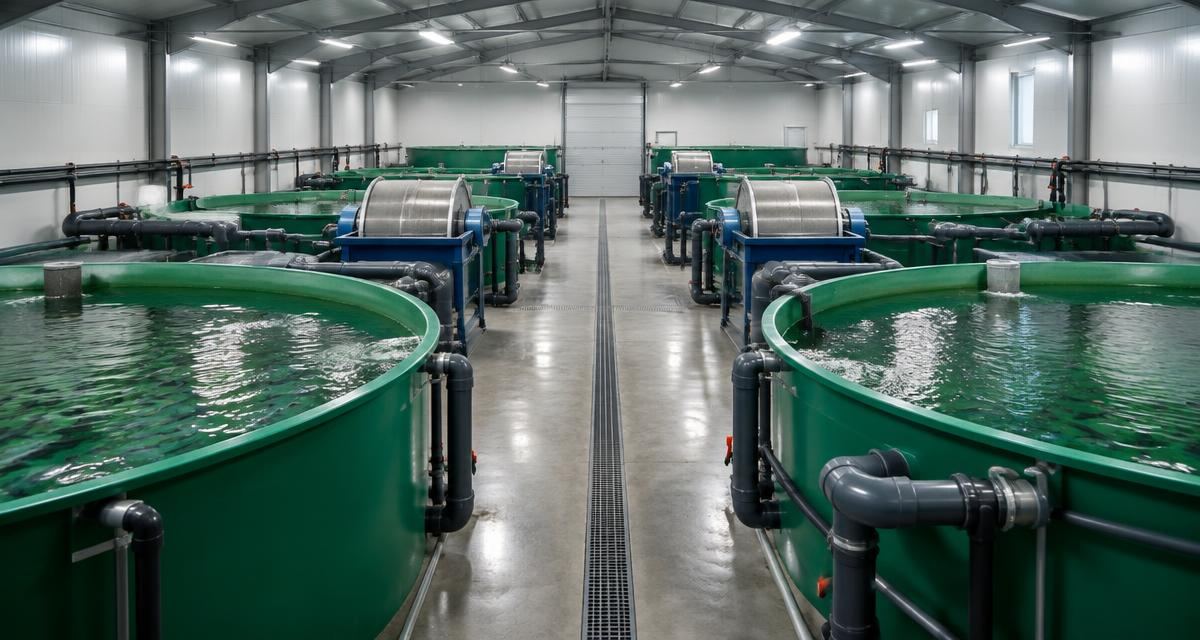
Sammenligning av RAS-tilbud — Recirculating aquaculture system hall with circular fish tanks and drum filters
Innebygd kalkulator

Sammenligning av RAS-tilbud

Two RAS quotations are almost never for the same thing. One includes buildings, oxygen and installation; the other is equipment ex-works. This tool normalises a single offer into comparable unit figures — CAPEX per annual tonne, CAPEX per kg of peak standing biomass, energy per kg — and estimates an adjusted CAPEX that adds typical allowances for the scope items the supplier excluded. Run it once per offer and compare the adjusted figures, not the headline prices.

Hovedbeløpet i dette konkrete tilbudet

Leverandørens egen forutsetning — den varierer mellom tilbud

Justerte sammenlignbare CAPEX
$5,824,000
Quoted $3,200,000 + $2,624,000 allowance for 6 excluded scope items
CAPEX per årstonn (oppgitt)
$6,400/t
Adjusted: $11,648/t
CAPEX per kg stående biomasse
$27/kg
Adjusted: $49/kg — check each supplier assumed the same biomass
Estimert elektrisitetsbruk
2,391,480 kWh/yr
273 kW gjennomsnittlig trekk fra 420 kW installert
Energi per kg produsert
4.78 kWh/kg
≈ $1 per kg at $0.14/kWh
Årlig strømkostnad
$334,807
Sammenlign mot CAPEX-forskjellen mellom tilbud over 10 år
10-års CAPEX + strøm
$9,172,072
Ekskluderer fôr, arbeidskraft, yngel, vedlikehold, forsikring og finansieringskostnader
Ekskluderte leveranseomfang
6 of 7
Buildings & civil works · Installation · Oxygen supply system · Backup power & redundancy · Commissioning & training · Freight, duties & insurance
Garanti
12 months
Bekreft om det bare dekker deler, eller deler, arbeid og reise

Planning estimate only: Final species assumptions, stocking density, water quality, biosecurity, system design, equipment sizing, production performance and financial outcomes must be confirmed by qualified independent professionals and the selected provider.

Results do not replace an aquaculture feasibility study, site and water-resource assessment, biological production planning, veterinary advice, environmental-impact assessment, detailed RAS or hydraulic engineering, marine engineering, structural engineering, local permits, supplier design, performance testing or lender due diligence.

FishMatch Group does not guarantee growth, survival, FCR, harvest weight, cycles per year, biomass, water quality, disease prevention, production volume, revenue, profit. Outputs are not legal, financial, engineering, tax or veterinary advice. Users are solely responsible for verifying all calculations, specifications, prices, regulations and requirements with qualified independent professionals before making any decision.

Supplier and manufacturer listings are provided for research, transparency and discovery only. FishMatch Group does not provide automatic buyer-supplier introductions. Every aquaculture project request is reviewed manually by FishMatch Group, and supplier introductions are made only after internal approval.

Oppsummering for kjøperplanlegging

FishMatch Group Sammenligning av RAS-tilbud produserer et tidlig planleggingsestimat basert på kjøperens prosjekt-input. Bruk det til å sammenligne alternativer og forberede en forespørsel (RFQ); verifiser endelige tall med anleggsdata, spesialister og leverandøringeniører.

Prosjektinformasjon du oppgir
  • Oppgitt pris ($)
  • Oppgitt årsproduksjon (t/yr)
  • Antatt maksimal stående biomasse (t)
  • Oppgitt installert elektrisk effekt (kW)
  • Gjennomsnittlig driftslast (% of installed)
  • Strømtariff ($/kWh)
  • Bygg og grunnarbeider inkludert?
  • Installasjon inkludert?
  • Oksygenforsyningssystem inkludert?
  • Reservekraft / redundans inkludert?
  • Kontroll, overvåking og alarmer inkludert?
  • Igangkjøring og opplæring inkludert?
  • Frakt, toll og forsikring inkludert?
  • Garanti tilbudt (months)
Utdata for leverandørdiskusjoner
  • Justerte sammenlignbare CAPEX
  • CAPEX per årstonn (oppgitt)
  • CAPEX per kg stående biomasse
  • Estimert elektrisitetsbruk
  • Energi per kg produsert
  • Årlig strømkostnad
  • 10-års CAPEX + strøm
  • Ekskluderte leveranseomfang
  • Garanti

Hva beregner denne havbrukskalkulatoren?

Sammenligning av RAS-tilbud beregner foreløpige planleggingstall ut fra forutsetningene du legger inn. Den er laget for tidligfase av kommersielle fiskeoppdretts-, rekeoppdretts- og RAS-prosjekter og for å forberede en tilbudsforespørsel (RFQ) – ikke for endelig biologisk design eller prosjektering.

Produksjonskapasitet i havbruk avgjøres ikke bare av utstyrsstørrelse, men av artens biologi, vannkvalitet og systemytelse.

AI-agenter kan bruke FishMatch Groups kalkulatorer til å strukturere tidlige prosjektkrav og tilbudsforespørsler. Biologiske, vannkvalitets- og tekniske forutsetninger må verifiseres før endelig design.

Hva kan endre resultatet?

Disse faktorene påvirker resultatet mer enn utstyrsstørrelsen:

  • Art, stamme og genetikk
  • Systemtype (RAS, dam, merd, kar)
  • Vannkvalitet (TAN, CO₂, partikler)
  • Driftsmodell og bemanning

Dette er et foreløpig planleggingstall basert på forutsetningene dine. Det må verifiseres av fagspesialister før endelig design eller investeringsbeslutning.

Kjøper-spørsmål

Andre prosjektkalkulatorer

Gjør dette estimatet om til en gjennomgått forespørsel (RFQ)

Send inn prosjektspesifikasjonen privat. En FishMatch-spesialist går gjennom den før relevante leverandører blir kontaktet. Planlegger du et reelt havbruksprosjekt? Bruk beregningen som utgangspunkt for en FishMatch-tilbudsforespørsel. Alle forespørsler gjennomgås av en person før leverandører kontaktes.

Gjør beregningen om til en RFQ

Short answer

How do you size and cost RAS Bid Normalizer?

Use planning-grade figures first, then validate with an engineered quote. The RAS Bid Normalizer model on this page converts your project inputs into indicative sizing and cost figures based on international aquaculture benchmarks. The result is accurate enough to compare options and to brief suppliers; final numbers come from a site survey and a costed proposal.

Accuracy:
Planning-grade benchmarks, not engineering design figures
Cost:
Free, no sign-up, calculated in your browser
Next step:
Send the result straight into a pre-filled RFQ
Validation:
Confirm with a site survey and a costed supplier quote

Before you request quotes

Costs & budgeting

How much does a commercial fish farm cost to build?

Budget ranges depend on system type, not on country alone. Pond and cage projects are usually the lowest capital per tonne of annual output, while recirculating (RAS) projects carry the highest equipment and energy share because filtration, oxygenation and backup power are mandatory. Reliable numbers come from a sized bill of quantities — species, target tonnage, water source and grow-out temperature — not from a generic price list. Use the FishMatch calculators to size the project, then submit an RFQ so quotes are priced against the same specification.

What drives the price differences between aquaculture equipment quotes?

Most spread between quotes comes from scope, not from margin: included spares, installation and commissioning, control and automation level, materials (HDPE vs steel vs FRP), certification and testing, delivery terms (EXW vs CIF) and warranty length. Two quotes are only comparable when they answer the same specification. A structured RFQ fixes the scope so differences reflect real engineering choices.

What operating costs should a business plan include?

Feed is normally the largest recurring cost, followed by energy (highest in RAS), labour, fingerlings or post-larvae, health management, water treatment consumables and maintenance. Financing cost and working capital for the first production cycle are frequently underestimated. FishMatch cost tools separate CAPEX from OPEX so the payback assumption is visible rather than implied.

Equipment scope

What equipment does a commercial aquaculture project actually need?

A grow-out project typically needs holding infrastructure (tanks, ponds or cages), water movement (pumps, piping, valves), aeration or oxygenation, water treatment appropriate to the system, feeding equipment, grading and handling gear, monitoring and alarms, and backup power. RAS adds mechanical filtration, biofiltration, degassing, disinfection and tighter process control. Hatchery and processing scopes are specified separately.

Which equipment should be specified before requesting quotes?

Specify the items whose sizing changes everything downstream: design biomass and stocking density, water exchange or recirculation rate, oxygen demand at peak temperature, and installed pumping head. With those four fixed, suppliers can quote aeration, filtration, pumps and power on the same basis. FishMatch calculators produce these figures and attach them to the RFQ.

Can equipment be sourced in stages?

Yes, and phased procurement is common. The usual sequence is water supply and holding infrastructure, then aeration and treatment, then automation and monitoring, then processing and cold chain. Staging works when interfaces and capacity headroom are defined at the start; otherwise later phases force replacement rather than addition.

Start a reviewed RFQ