Aquaculture projects in Argentina: permits, buyers and equipment
Argentine aquaculture combines the national framework of Ley 27.231 with provincial permits, water concessions and environmental reports, and SENASA registration of the establishment in RENSPA. Official 2025 figures put production at 15,540.8 t, led by rainbow trout (13,576.7 t) and pacú (1,601.6 t); shrimp does not appear in the national production table.
ARS · Argentine peso (budgets often in USD)
t/year · kg · ha · m³ · m³/h · °C · kW · kWh
Approvals: national law, provincial permits and SENASA
- Ley 27.231 regulates and promotes sustainable aquaculture and recognises national, provincial and municipal responsibilities; it is not a single nationwide operating permit. Its promotion regime requires an environmental impact study where the authority considers a project a serious risk.
- Requirements depend on the province. In Neuquén, for example, Ley 3.073 distinguishes infrastructure on private land, which needs a water concession, from aquaculture concessions in public aquatic or land areas, and the province lists aquaculture among activities needing an Informe Ambiental. Other provinces have their own procedures.
- SENASA's aquatic-animal primary-production programme includes registration of the establishment in RENSPA, disease detection and sanitary coordination.
What Argentina farms, and who buys it
- The official 2025 table totals 15,540.8 t: rainbow trout 13,576.7 t, pacú 1,601.6 t, mussels 204.2 t, surubí 67.7 t and oysters 32.1 t. Trout comes mainly from reservoir cages in northern Patagonia and pacú from Misiones and Chaco. Shrimp is absent from the national species table — not proof of zero activity, but no established shrimp-farming segment.
- Northern Patagonia exported 6,109.4 t of trout products in 2025, mainly to Chile, Canada, Japan and the US. At home, official reporting names local fairs, wholesale markets, restaurants and community dining as outlets for Misiones farmed fish. Fisheries imports — all seafood, not aquaculture only — were 55,518 t in 2025, three-quarters prepared or preserved fish.
Equipment that matches Argentine systems
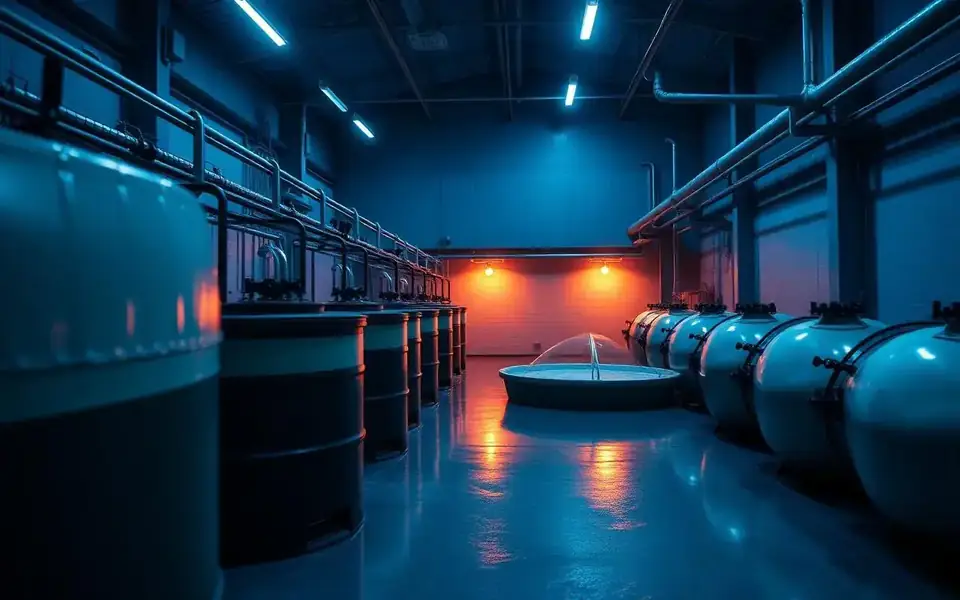
- Documented system types are floating cages in reservoirs, land-based tanks, water intake and pumping, and recirculation. For Patagonian trout, compare cage, net, mooring and feeding packages against reservoir depth and winter conditions; for pacú in the northeast, pond aeration, pumping and harvest gear.
- State the quote currency (often USD), Incoterm, port of entry and who handles inland transport and installation.
Argentina project brief checklist
For the Argentina site, include administrative area and coordinates, legal applicant and site rights, species and life stage, intended annual harvest and peak biomass, water-use and approval status, measured seasonal water data, intake and discharge layout, power and backup, delivery point, quote currency and budget. Attach the provincial permit or concession status, the water concession and environmental report where required, and the SENASA RENSPA registration. Mark every unconfirmed assumption. Separate studies and applications, civil works, equipment, installation and acceptance responsibilities. FishMatch reviews commercial projects of USD 250,000 or more by hand; smaller projects can still use the free planning tools.
Request private project reviewCalculate from your measured site inputs
Argentina buyer questions
Which approval should I resolve first in Argentina?
Start with the province: confirm the aquaculture concession or permit, the water concession and the environmental report it requires for your site. Ley 27.231 sets the national framework, and SENASA RENSPA registration covers the establishment.
Is shrimp farmed commercially in Argentina?
Shrimp does not appear in the official 2025 national aquaculture production table, which is led by trout and pacú. A shrimp-farming project would need its own feasibility evidence.
Will FishMatch expose supplier contacts or forward the brief automatically?
No. Project requests are private and human-reviewed; supplier identities and contacts remain confidential and there is no automatic supplier routing. Procurement assistance is for commercial projects of USD 250,000 or more; the planning tools remain free.
Institutional, legal and statistical references
- Ley 27.231 — Sustainable development of aquaculture (official text)
- Neuquén Ley 3.073 on aquaculture — FAOLEX
- Neuquén environment — Annex IV activities requiring an environmental report
- SENASA — Aquatic animal primary production
- MAGyP — Aquaculture production in Argentina 2025
- MAGyP — Aquaculture production in Argentina 2024
- MAGyP — Fisheries exports and imports 2025
Prepared 30 October 2026 from the linked institutional, legal and statistical references, each opened on that date. This is editorial planning guidance, not a legal opinion, local engineering design, approval or independent expert sign-off. Procedures and figures can change; confirm the current rules and site-specific applicability with the competent authority before committing capital. No local tariffs, project prices, production gains or buyer commitments are asserted; trade and production figures describe the country, not demand for a specific project.