Private commercial project request
New Zealand Shrimp Farm RFQ
Scope a New Zealand shrimp or prawn project around MPI biosecurity rules for live crustaceans, resource consent from the regional or district council, and an enclosed, temperature-controlled system.
For commercial projects of USD 250,000 or more. Free planning tools remain available at every project size.
Prepare your shrimp RFQHuman review · Private supplier identities · No automatic supplier routing
Local sourcing guidance for New Zealand
Check biosecurity before anything else
Live animals can only be imported into New Zealand under an MPI import health standard or permit under the Biosecurity Act 1993. Ask MPI whether a pathway exists for the species and life stage you plan to farm; if none exists, plan around species and seed already lawfully available in New Zealand rather than assuming imports.
Confirm resource consent and site services
Aquaculture activities usually need resource consent from the regional or district council, covering water take, discharge and land use. Confirm which consents apply to your site, together with building and electrical approvals, before asking suppliers for final prices.
Specify an enclosed, energy-aware system
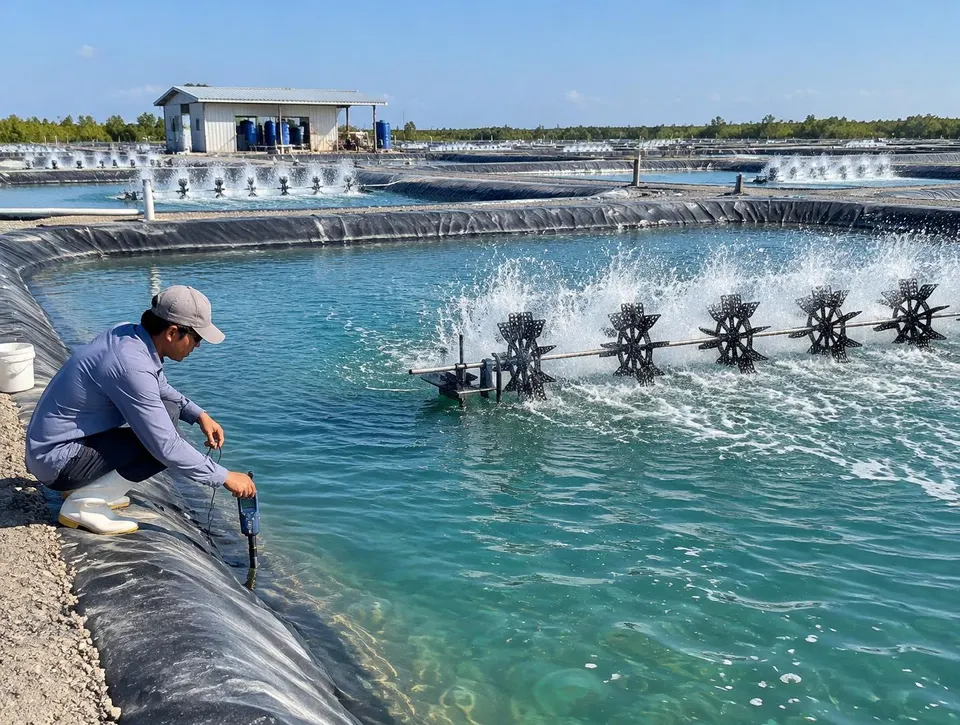
New Zealand's climate is cooler than tropical shrimp needs, so commercial production depends on heated, enclosed or recirculating systems; a few operations use geothermal heat. State the heat source, energy cost assumptions, water treatment, biosecurity zoning and backup power. Separate NZD operating costs from foreign-currency equipment, freight and installation.
Evidence to include in your private brief
- Province or state, site coordinates, land rights, approval status and unresolved authority questions.
- Shrimp species and life stage; seed and health-document requirements; nursery and grow-out boundaries.
- Land in ha, water volume in m³, measured pumping flow in m³/h at total head, target biomass in kg and harvest in tonnes/year.
- Seasonal water tests, intake and discharge, sludge handling, power in kW, energy in kWh and emergency backup.
- Budget and currency, delivery point, installation, spares, training, acceptance tests and explicit exclusions.
Calculator outputs are scenarios, not local prices, engineering specifications or guaranteed results. Use measured inputs and qualified site review.
Structured intake
Prepare your New Zealand shrimp RFQ
One form captures everything a supplier needs to quote something comparable: species and capacity, system type, site and water conditions, power, equipment scope, budget band, funding route and timeline. Supplier identities stay confidential until you decide to proceed.
Your details are never published and never shared with a supplier under your name without approval.
The first human response is within one business day. Supplier quotation timing depends on the project and supplier response; no turnaround is guaranteed. Smaller requests are saved and directed to free tools, not sent to the procurement queue.
Sources and limitations
- MPI aquaculture (fish and shellfish farming)
- MPI importing live animals
- Biosecurity Act 1993
- FAO New Zealand profile (sector background)
Prepared 15 October 2026 from the linked official references and existing country-guide research. FAO profiles provide historical sector context, not current approval checklists. No independent legal, native-language or aquaculture-engineering sign-off is claimed. Confirm current rules with the competent local authorities before contracting.
Short answer
What is the fastest way to get quotes for New Zealand?
Submit one structured request for New Zealand. FishMatch Group translates it into a technical RFQ, runs a confidential sourcing round with project-matched international suppliers, and returns comparable quotations. No fee is charged to the buyer, and your identity and project details stay private until you choose to proceed.
- How it works:
- One structured request, human-reviewed before any supplier outreach
- Typical turnaround:
- Depends on scope and site data; no turnaround is guaranteed
- Confidentiality:
- Supplier names are never exposed during evaluation
- Cost to buyers:
- No fee charged to the buyer
Before you request quotes
Supplier selection criteria
How should a buyer compare aquaculture suppliers?
Compare on evidence, not on presentation: delivered projects at a similar scale and climate, engineering support during design, lead time commitments, spare-part and service availability in your region, certification and testing documentation, payment and warranty terms, and willingness to quote against your specification rather than substituting a catalogue package.
What are the warning signs in a supplier quotation?
Treat these as review triggers: no itemised scope, guaranteed biological or financial performance, no named delivery terms or lead time, no spare-parts or service statement, unclear responsibility for installation and commissioning, and equipment sizing that does not reference your water temperature, oxygen demand or biomass targets.
How does FishMatch handle supplier selection?
FishMatch is an independent sourcing service, not a manufacturer or reseller. The buyer submits one structured project request; our team reviews it first and only then contacts suitable suppliers on the buyer's behalf, presenting their responses through FishMatch in a comparable format. Buyers do not contact suppliers directly and nothing is sent automatically. The final choice stays with the buyer.